
I have spent my career at the meeting point of research and practice, building inclusive ecosystems in education and at work. That work has taught me one thing above all: the strength of a system lies in the range of people it is built to serve. When we design for the full breadth of human difference, we build something that holds. When we narrow it to a single kind of user, we build something that breaks the moment conditions change.
I wrote this foresight paper because artificial intelligence is now forcing that choice on every organization at once, and faster than any technology before it. We can adopt AI in a way that flattens human difference, or in a way that draws strength from it. The technology will not decide for us. The intent behind its design will.
I come to this from accessibility, which is too often mistaken for a compliance task at the edge of the product. I see it differently. Accessibility is the discipline of designing for human variation, and human variation is what lets a system stay resilient when everything around it is shifting. This is not a metaphor I reach for lightly. It is a principle I have watched hold true across more than a decade of building technology with, and for, people with disabilities.
The phrase my colleagues and I keep returning to in our published work is this: we can welcome AI for its enormous potential while developing its use at the speed of trust. By that I mean we adopt new technology only as fast as we can keep it accessible, equitable, and trustworthy for the people it touches. Trust is not a feature you ship. It is something you earn, learner-by-learner.
My paper is not aspirational. It is based on an established Three Horizons Framework. The future I describe is not a hope. It exists already, in documented and peer-reviewed practice, in organizations that placed accessibility inside the product, co-designed with users with disabilities before shipping, and helped shape international standards rather than waiting to comply with them. We are still learning how to do this well. That is precisely the point, and precisely the work.
My hope is that you read this, find your own organization on the horizon it is building toward, and then choose deliberately. The people you serve are not a single, uniform user. They never were. Designing as though they are the surest way to lose them.
I am grateful to the researchers, standards-makers, and disability advocates whose work runs underneath every page here. ‘Nothing without us’ is not a slogan to me. It is how the best of this work has always been done.
Overview
The organizations that will lead through the age of AI are not the most technologically sophisticated. They are the most intentionally inclusive.
This paper examines the turbulent evolution of work and learning into the foreseeable future. It introduces the concept of ecosystem resilience, grounded in a foundational concept from the science of accessibility: when systems converge toward a homogeneous single representation, it leads to the collapse of the adaptive capacity, afforded by human difference, that ecosystems need to remain resilient. The paper names this human difference, popularly called diversity, as human variation. It establishes accessibility as the primary mechanism through which learning ecosystems build resilience.
Using the Three Horizons foresight framework (Sharpe, Hodgson, Curry; Ecology and Society, 2016), this paper maps three simultaneously active systems:
- Horizon 1: Trust as Technology. The dominant model treats trust as a property of the platform. Accessibility sits at the edge as a compliance task. Losing fit under three converging pressures: global scale of disability ($675B US market, 1.3B people), regulatory requirements, and AI.
- Horizon 2: The Turbulent Transition. Generative AI has entered learning faster than any technology before it. Completing a task with AI is not the same as learning. The ecosystem is restructuring: learners, facilitators, and purveyors of learning are renegotiating their roles.
- Horizon 3: Human Variation as the Mechanism. The emerging model begins with the learner. Accessibility is the architecture. Pockets of this future already exist in documented, peer-reviewed practice.
Five pillars hold up the Horizon 3 ecosystem: the learner at the center; accessibility as infrastructure; AI built with difference; ecosystem resilience through human variation; and the facilitator, not the gatekeeper.
The Horizon Before Us
Every wave of technology forces a choice. An organization can adapt to the full range of people it serves, or it can converge toward a simpler, more uniform model that is easier to build and faster to scale. The second path leads to fragility. When systems converge to a homogeneous single representation, human variation collapses, and with it the adaptive capacity that ecosystems need to remain resilient.
The organizations best prepared for the age of AI are not always the ones with the most advanced technology. They are the ones that have already learned to design for human difference. The discipline it takes to include every learner is the same discipline that lets an organization absorb change without losing the people it serves.
When a system converges toward a single representation of its user, human variation collapses. Where there is variation, ecosystems remain resilient. This is a concept from accessibility.
A Foresight Framework for the Decade Ahead
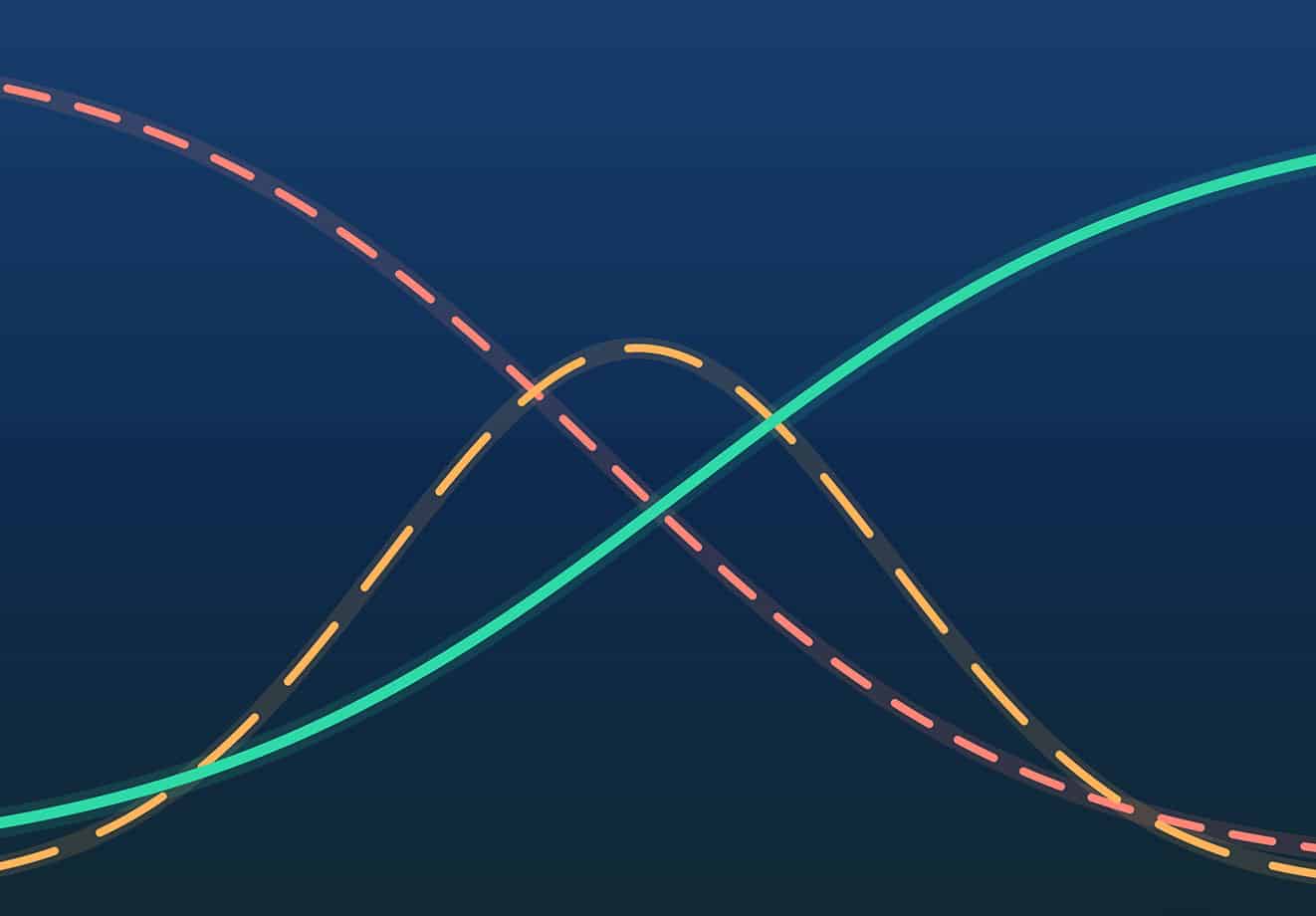
The Three Horizons framework (Sharpe, Hodgson, Curry; Ecology and Society, 2016) describes change in any system as three horizons that exist simultaneously. Horizon 1 is the dominant system of today, gradually losing its fit. Horizon 3 is the emerging future, visible first in small pockets. Horizon 2 is the turbulent transition between them.
Applied to trust in learning, the three horizons map cleanly onto what is happening now. The diagram below maps all three. The three curves are distinguished by line style (dotted, dashed, solid) as well as colour, so the relationships remain legible without relying on colour perception alone.

Horizon 1: Trust as Technology
The dominant model treats trust as something engineered into the platform. Security certifications, governance frameworks, and compliance audits are its evidence. Accessibility sits at the edge as a legal requirement. Three pressures are eroding this model’s fit: scale (1.3 billion people with disabilities globally, a $675B US consumer market per Disability:IN 2026); regulation (EU Accessibility Act June 2025, ADA Title II enforcement, Canada’s AI accessibility standard); and artificial intelligence, arriving faster than any previous technology.
Horizon 2: The Turbulent Transition
Generative AI has entered learning faster than any technology before it. The OECD’s Digital Education Outlook 2026 report states that by 2024 more than a third of lower secondary teachers were already using AI in their work. The same report carries a warning: students using general-purpose AI often produce better work, but the advantage tends to vanish once the AI is taken away. Completing a task with AI is not the same as learning. The difference is the whole point.
The learning ecosystem, made up of learners, facilitators, and the providers of learning, is restructuring. As AI widens access to knowledge, the platform’s role shifts. The organizations that anchor their value in facilitation, not delivery, carry it forward.
Organizations that built for human difference from the start are not bracing for what is coming. They already understand, and facilitate, what it asks of them.
Horizon 3: Human Variation as the Mechanism of Resilience
The emerging model inverts the logic of Horizon 1. Trust is not engineered into the platform and then extended toward the learner. It begins with the learner and is built outward. Accessibility is not a compliance obligation. It is the architecture.
When a system converges on one standard user, that variation collapses. And under rapid, unpredictable change, variation is exactly what keeps a system resilient. The curb cut effect has established across decades: what is designed for the margin reliably serves the mainstream.
There is a cognitive dimension to this as well. The OECD’s finding that AI can reduce learning is, at bottom, a finding about cognitive load. Organizations at the leading edge of Horizon 3 design for the full range of cognitive difference, including attention, processing, memory, and executive function.
Horizon 3 is already visible in pockets of the present. Organizations that placed accessibility inside their product function, co-designed with users with disabilities before shipping, and shaped international standards rather than merely complying with them, are already operating by Horizon 3’s logic. This is not aspiration; it is documented practice, verifiable in peer-reviewed publications.
How do you build an organization that the transition does not threaten? Build it for everybody from the beginning.
Five Pillars of an Inclusive Learning Ecosystem
Five pillars hold up the Horizon 3 ecosystem. They come from established practice, not aspiration.
| Pillar | What it means in practice |
|---|---|
| 1. The Learner at the Center | Trust is measured from the experience of the person learning, not the performance of the system. Getting AI to complete a task is not the same as learning. |
| 2. Accessibility as Infrastructure | Accessibility is foundational architecture, owned where products are built. Standards are a floor. Co-design with users with disabilities is the method. |
| 3. AI Built with Difference | AI is designed with the people it is meant to serve. Nothing without us. This includes cognitive difference: attention, memory, processing, and executive function. |
| 4. Ecosystem Resilience Through Human Variation | Human variation is the mechanism through which an ecosystem stays resilient through transition. Building for the full range of human variation builds adaptive capacity. |
| 5. The Facilitator, not the Gatekeeper | The ecosystem of learning comprises learners, facilitators, and purveyors of learning. As AI democratizes access, the role of education technology shifts from delivering to facilitating. |
The Evolution of Work and Learning
The argument here is not confined to educational institutions. It follows the evolution of work and learning itself. As AI changes what work is, it changes what people must learn, how quickly they must learn it, and how often they must learn it again. Learning is no longer a phase that precedes work. It is a continuous condition of work.
Human variation is not a niche concern at the edge of the workforce. It is the central design fact of a world in which everyone is continuously learning. The systems that equip that workforce to keep learning through every technological shift are the systems built for variation from the start. The organizations already ahead of the regulatory architecture are not scrambling to comply; they helped write the standards.
The Choice Before Leaders
The Three Horizons framework is ultimately a tool for choice. In any moment of transition, leaders are deciding whether their innovations prop up a declining system or help a better one emerge. An accessibility programme can be a compliance exercise that extends Horizon 1, or it can be the first pillar of a Horizon 3 ecosystem. An AI initiative can turn into a cognitive crutch and hollow out learning, or it can adapt to human difference and provide necessary assistive intelligence to deepen it. The technology does not decide. The design intent does.
Three choices follow. First: relocate accessibility from the margin to the foundation. Second: insist that AI be designed with learners with disabilities at the center. Third: recognize that trust is now an ecosystem property, and the organizations that will lead are those building the capacity to absorb continuous change without ever losing the people they serve.
The pockets of the future are already here. The work of leadership is to recognize them, learn from them, and choose deliberately which horizon to build.
What This Means: Horizon 3 in Practice
The evidence is in the peer-reviewed record. One organization in the learning technology market published full conformance with WCAG 2.2 on the day the standard was released, October 5, 2023. The same organization co-designs with assistive technology users at the product level before shipping, not after. Its accessibility leadership chairs the international standards committee for learning technology, is one of five founding members of the W3C community group updating authoring tool accessibility guidelines for AI-based tools, and co-authored the national AI accessibility standard now in force in Canada. Its process for developing an accessibility maturity model that improved upon the W3C framework to add a product dimension the global standard had not yet captured is documented in a peer-reviewed publication (Jeemon, McCardle, Windhorst, Wilhelm, and Chandrashekar, 2024).
We can welcome AI for its enormous potential while developing its use at the speed of trust, responsibly and safely. That phrase is not rhetorical. It appears in a peer-reviewed service design journal (Chandrashekar, Willis, and Jackson, 2024), where it names a discipline: adopt new technology only as fast as you can keep it accessible, equitable, and trustworthy for the people it touches.
Three things remain for every leader. First: locate your organization on the diagram in Section 2. Which horizon are you building for? Second: test the five pillars in Section 6 against your current practice. Third: recognize that Horizon 3 is not a destination that requires waiting. It requires choosing.
The organizations living in Horizon 3 are not waiting for the transition to arrive. They are already on the other side of it.
A Closing Note
I opened by saying that the strength of a system lies in the range of people it is built to serve, and everything between these pages is an argument for taking that seriously. Three horizons are active at once: a model that treats trust as a property of the platform and accessibility as a task at the edge, a turbulent transition in which AI is reshaping what it means to learn, and an emerging future that begins with the learner and treats accessibility as the architecture rather than the afterthought. Human variation is the thread running through all three. It is what lets an ecosystem absorb change without losing the people inside it, and it is why the organizations that designed for difference from the start are not bracing for what AI brings but are already living on the far side of it. The technology will not make this choice for us. We make it, learner by learner, at the speed of trust. My hope is simply that you choose, and choose deliberately, the horizon you are building.
This is a conversation I would genuinely like to continue with you. If any of this resonates, or if you see it differently, I want to hear from you. Reach out and follow my work and join the conversation on LinkedIn at linkedin.com/in/sambhavichandrashekar. The pockets of the future are easier to build together than alone.
Sources
Accessibility Conformance. https://www.d2l.com/accessibility/standards/.
Chandrashekar, S. and McCardle, L. (2020). How WCAG 2.1 Relates to Online User Experience with Switch-based Tools. Journal on Technology and Persons with Disabilities, Vol. 8, p. 223.
Chandrashekar, S., Willis, J., and Jackson, A. (2024). Designing Equity and Accessibility into AI for Services. Touchpoint, Vol. 15(1), pp. 46-49. DOI: 10.30819/touchpoint.14-3.0X.
Disability:IN and American Institutes for Research (2026). The Next Growth Market: Inside the $675 Billion Consumer Opportunity. June 23, 2026.
European Accessibility Act, Directive (EU) 2019/882. Enforcement effective 28 June 2025.
Human-variation-as-resilience framework: original conceptual contribution by Dr. Sambhavi Chandrashekar, drawn from foundational principles in accessibility theory.
Jeemon, A., McCardle, L., Windhorst, L., Wilhelm, K., and Chandrashekar, S. (2024). D2L’s Process for Developing an Accessibility Maturity Model. Journal on Technology and Persons with Disabilities, Vol. 12, p. 262. https://hdl.handle.net/20.500.12680/v692tf26f.
Kumaresan, M., McCardle, L., Chandrashekar, S., Karakus, E., and Furness, C. (2022). Learning with ADHD. Journal on Technology and Persons with Disabilities, Vol. 10, p. 249.
OECD (2026). Digital Education Outlook 2026.
Sharpe, B., Hodgson, A., Leicester, G., Lyon, A., and Fazey, I. (2016). Three horizons: a pathways practice for transformation. Ecology and Society 21(2):47.
WHO (2024 to 2025). Disability fact sheet. WHO Disability Health Equity Initiative, June 2025.
Written by:


