
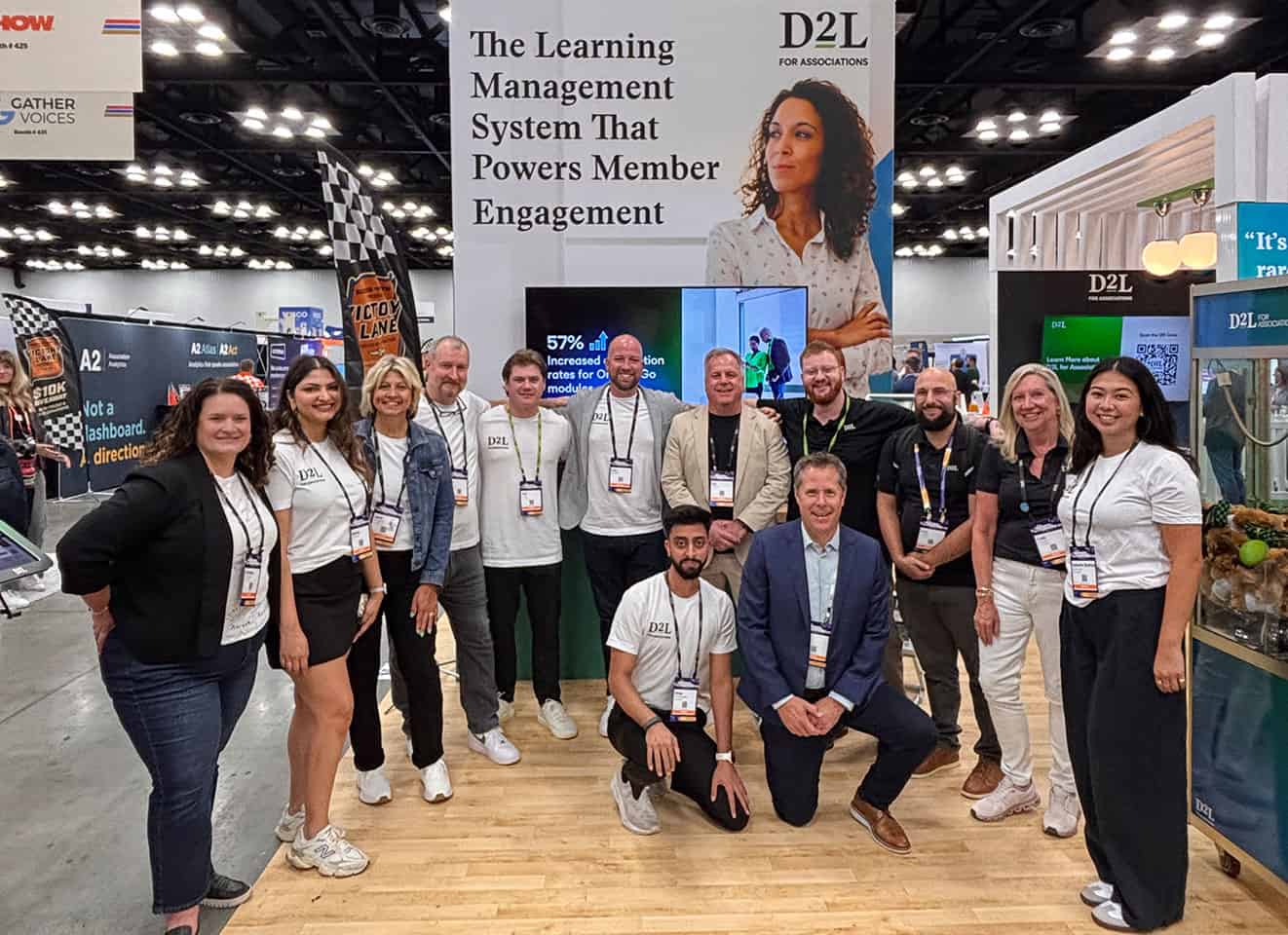
At ASAE Annual 2026, one question surfaced again and again: how can associations continue creating value as member needs, workforce expectations and the role of education evolve?
This year, D2L’s session with Project Management Institute (PMI) took center stage. In The Learning-Led Shift: AI, Education & the New Path to Growth, Value & Revenue, D2L’s Bill Sheehan, Global Head of Association Strategy, and Kelly Heuer, VP of Learning at PMI, discussed how associations can transform education to strengthen member value, support workforce development and create new opportunities for growth.

One message stood out: learning is becoming a core organizational strategy—not simply another program an association offers.
Here are three key takeaways from the conversation:
Continuous learning is becoming essential
As industries and workforces evolve, members need opportunities to upskill and build new skills throughout their careers.
“Continuous learning is more important now than it’s ever been across professions. When you look at the level of disruption in skills and job postings and what is expected of professionals,” Kelly said.
Associations are well positioned to provide relevant learning that helps professionals adapt while addressing changing industry needs. To maximize its value, associations should look beyond learning as a standalone program and consider how it can become a strategic service, and a potential source of non-dues revenue.
Credentials can expand value
Continuous learning can include certifications, micro-credentials and other forms of recognition to give members tangible ways to advance their careers. When these offerings are relevant and easy to access, they can strengthen member engagement.
One example of that impact comes from American Nurses Association, where 93.1% of surveyed learners said association courses helped improve their day-to-day nursing practice. It’s a useful illustration of how education can translate into practical member value while reinforcing an association’s role in professional development.
A modern learning portfolio can build resilience
Associations are rethinking their learning portfolios to include courses, short-form content, credentialing programs, events, communities and other resources aligned with workforce needs. These offerings can strengthen financial stability, differentiate the organization and deliver value throughout the member journey.
AI can support this shift by helping associations create relevant content, while analytics provide insight into learner engagement and program performance. Together, these tools help leaders make informed decisions about which offerings to expand, update or introduce next.
This reflects a broader shift in how associations approach learning. Instead of asking, “What programs should we offer?” leaders should ask, “What do our members and industries need to learn next and how can we help them get there?”
A modern learning portfolio is not simply a larger collection of programs. It is a connected strategy for delivering member value, responding to workforce needs and building new opportunities for sustainable growth.
Turning that strategy into action also requires alignment across the organization, including support from senior leaders and the board. Our recent guide, Getting Your Board on Board, explores how associations can position learning as a strategic investment, demonstrate measurable value and build long-term support for learning initiatives.

If there was one takeaway from ASAE Annual, it’s that the opportunity isn’t simply to offer more learning. It’s to make learning part of how the organization creates value, responds to change and plans for what comes next.
Subscribe to the Learning by Associations newsletter for future insights, event updates and resources for association leaders. Until then, see you at next year’s ASAE Annual in Charlotte.
Written by:


