
Rewiring UK higher education
In this whitepaper, discover key strategies UK universities can adapt to navigate the technological disruptions, transformative financial pressures, and fluctuating student enrolments facing higher education.

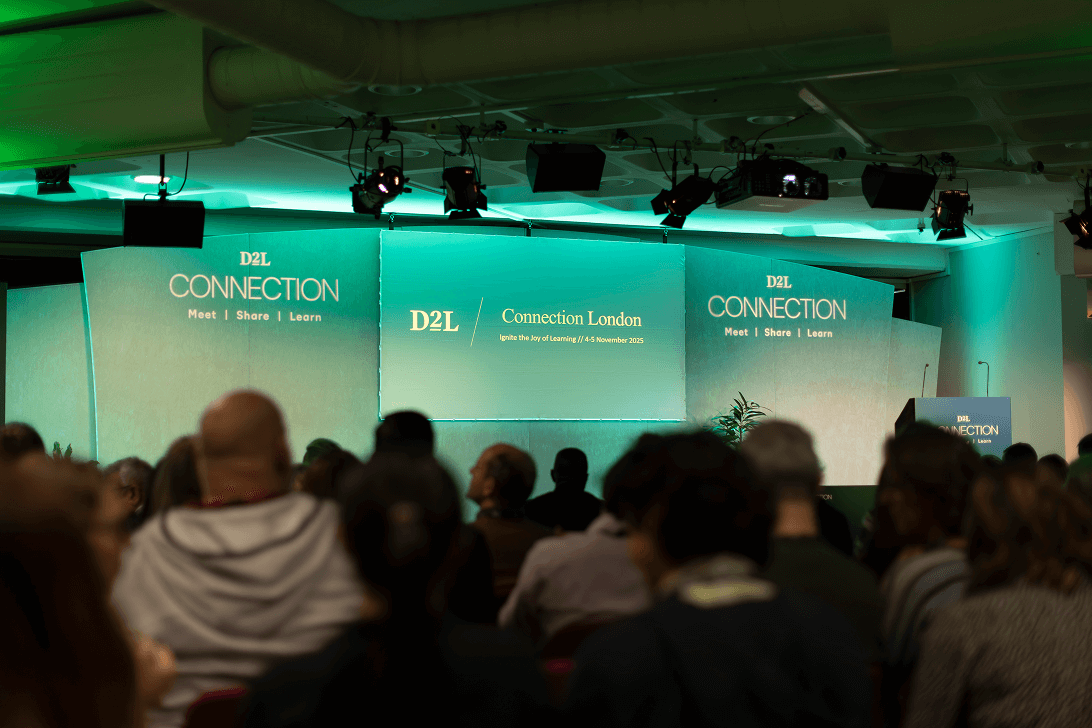
Our D2L Connection: London event, held at the historic Queen Elizabeth II Centre in Westminster, was a place for academic and corporate leaders to network, learn, and expand their horizons to help shape the future of education and work.
The theme this year, ignite the joy of learning, was exhibited by our panelists, keynotes and participants over the course of the event. In this blog post, we’ll explore the reoccurring themes and innovations that were brought to light throughout the event.
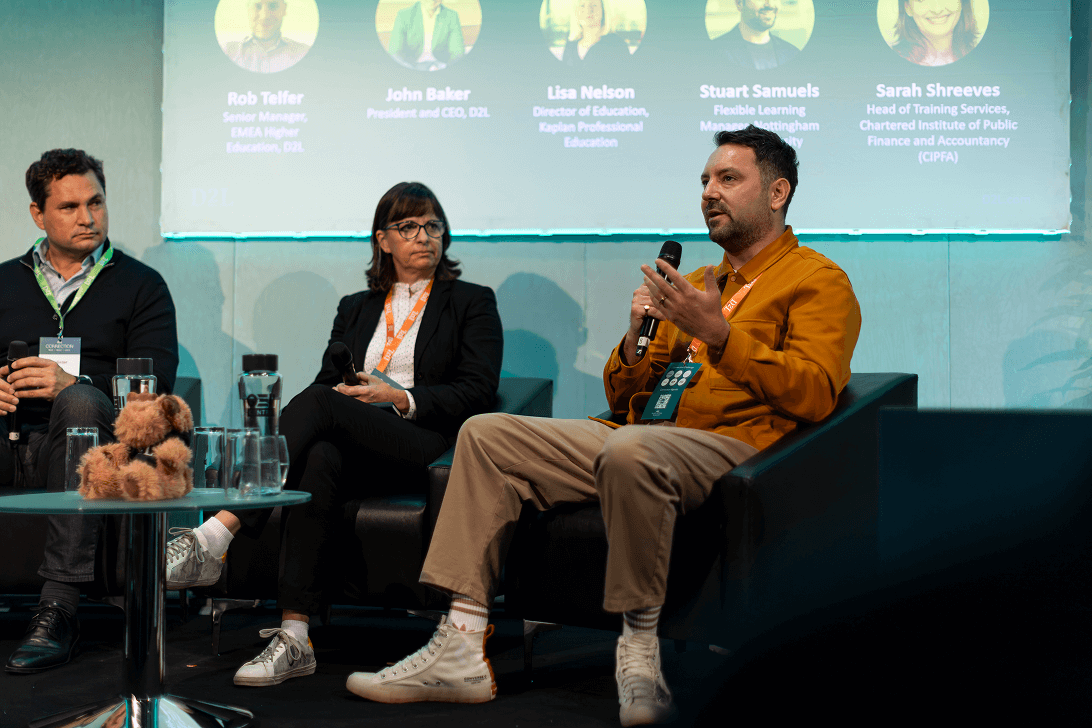
AI was a trending topic among most sessions, but in all the right ways. Rather than dwelling on what AI might take away, speakers and attendees explored what it could give back: time, focus, and creative freedom.
In her opening keynote, Rose Luckin, professor emerita at the University College London, urged educators to use AI to amplify the human experiences that make learning transformative. Attendees were encouraged to use AI to reignite the fundamental joy of learning, designing partnerships between humans and technology that elevate both.
In Dr. Luckin’s research, she highlights how metacognition—which includes aspects like a human’s ability to reflect on knowledge gained in order to improve, and being able to determine if something is true or not—is what makes human intelligence unique. She suggests that AI is pushing us to develop our own human intelligence and highlights opportunities she sees to use AI to better understand how students learn to provide more targeted support.
Higher education institutions must continue to be vigilant with the use of AI, and continuously striving to find new ways it can enhance learning. One example that was tackled at the Connection event was a session on driving innovation in learning by Imran Ahmed, vice president product marketing at D2L. The conversation focused on showing how AI can personalise learning and empower educators without losing the human aspect.
In a session on turning accessibility into an advantage, attendees explored how Accessibility+ combines AI automation with expert human oversight to reduce manual work while delivering content that’s accessible for all learners.
Attendees were also given a deep dive into D2L’s partnership with H5P and how its use of AI is speeding up content production without losing quality. Conference goers received practical tips on how they can remain at the helm of content creation, leaning on AI to free up more time so educators can refocus effort where it matters most: Supporting learners.
In this whitepaper, discover key strategies UK universities can adapt to navigate the technological disruptions, transformative financial pressures, and fluctuating student enrolments facing higher education.
Effectively showing the value and impact of learning for associations was a recurring theme in several presentations. Presenters spoke to how associations need to start reimagining the role of learning for their members and realise that when done right, programming can have ripple effects on entire industries.
With associations facing challenges like sustainability and skills gaps, it’s time for them to start envisioning the larger impact of not having the right educational programming. When associations can show the effectiveness of their learning, it can extend its reach to transform industries,as showcased in our panel discussion with the Irish Rugby Football Union. Education can raise professional standards to reach non-members, drive policy change, and elevate associations as industry leaders.
Defining the value of education was also explored during this Connection event, being ighlighted in a session on learning investment strategy with The Chartered Institute of Logistics and Transport. Learning isn’t just an investment in education, but also into organisational transformation that can create compounding strategic advantages.
To get more tips from some of the leading professional membership organisations—like the CIPD, IRFU, LIA, BSLM and the ICAEW—check out our 2025 whitepaper: Funding the future: Why earning through learning is critical for modern membership organisations. Or, if watching is more your thing, catch up with the panel discussion we held with some of these valued contributors, earlier this year: Funding the future discussion: Real stories of learning-led growth in membership bodies.
A hallmark of every D2L Connection event is its community, and London 2025 was no exception. Three of our customers ran sessions on their successful migrations to Brightspace:
Other highlights included a session from De Montfort University on its VLE implementation and how they’re using block teaching to drive pedagogic innovation.
A special panel discussion was also held with three customers—Nottingham Trent University, Technical Universiteit Delft and the Grain and Feed Trade Association—who shared ten lessons from a decade worth of experience with Brightspace, showcasing how to maximise the use of the platform.
By the time the closing remarks wrapped, one takeaway stood out: the joy of learning is alive and well and technology can help it flourish.
Participants left with new connections, practical ideas, and a shared optimism for what’s ahead. D2L Connection London 2025 celebrated progress, but it also issued a challenge: to keep experimenting, keep collaborating, and keep joy at the heart of every learning experience.
Get involved
D2L’s events are a place to build relationships, elevate your craft and have some fun. Discover where we’ll be next on our events page.
The Brightspace Community is the top place for D2L’s clients, partners, users, developers and staff to connect and create. It’s a wealth of knowledge related to product information, release notes, documentation, videos and webinars—a place to share knowledge and product ideas, and to connect with others and ask questions. Register for free to join the Brightspace Community and get involved.
Written by: