
Where?
Makati Shangri-La, Manila
Ayala Avenue, Makati Ave, Makati City, 1200 Metro Manila, Philippines
LocationWe’re thrilled by the overwhelming interest and registration is officially closed. If you’d like to attend, please contact Mary ([email protected]) or Jamie ([email protected]) and we’ll be in touch to confirm your registration.


See what AI-augmented teaching looks like in practice, including how to design assignments that still require real thinking, and how to assess students fairly now that AI is part of how they study
Hear how Philippine institutions are putting CHED’s memorandum into practice, what the industry considers real employability, and how a leading Singaporean institution approaches micro credentialing
See how universities in the Philippines can build more resilient learning experiences, helping students stay engaged and lessons continue when weather events and other disruptions interrupt classes.
Teach Forward: Building the Philippine Higher Education Institution that Students, Employers, and the Future actually need
Higher education in the Philippines is entering a period defined by converging shifts: artificial intelligence entering both teaching and assessment, a national micro-credential framework taking shape, and the work of scaling strong teaching practice from a few classrooms to an entire institution.
This forum brings together institutional leaders, academic managers, faculty, and technology practitioners to examine what each shift demands in practice: from redesigning pedagogy alongside AI, to determining what makes a credential genuinely valuable to a graduate, to bringing that same rigor to how teaching is scaled across a campus.
Attendees will leave with a sharper understanding of what these changes mean for their own institutions, and a clearer sense of who else is already working through them.
Real Conversations, Grounded in Practice
Spend the day with institutional leaders, faculty, and technology practitioners working through the realities of Philippine higher education and the challenges we face today.
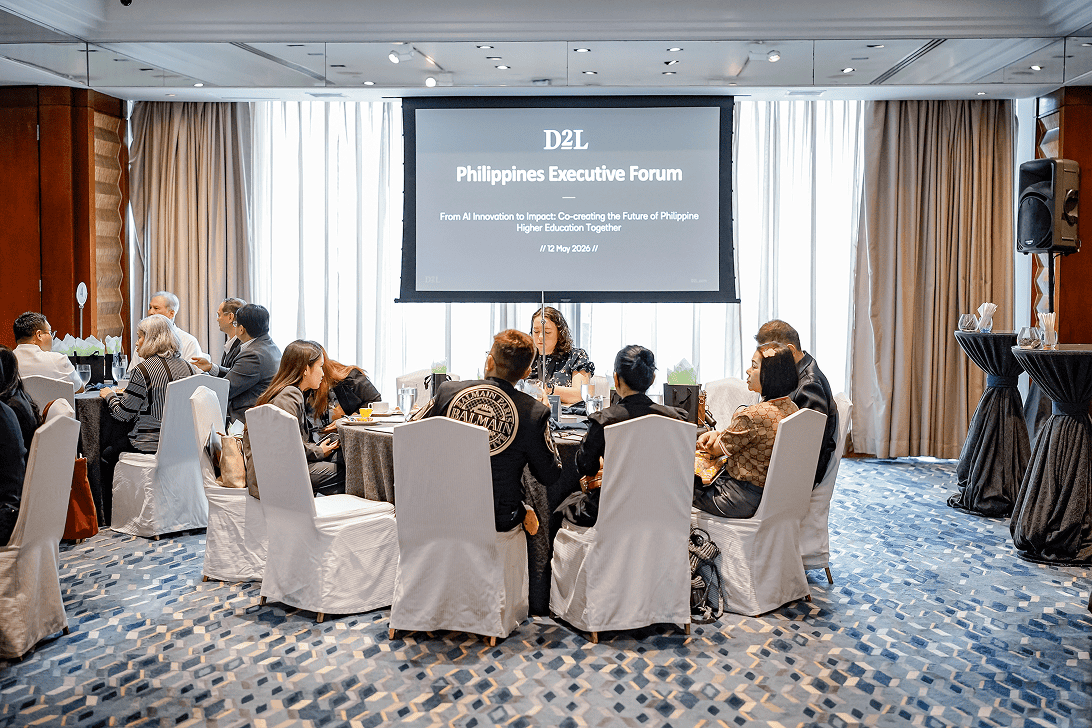
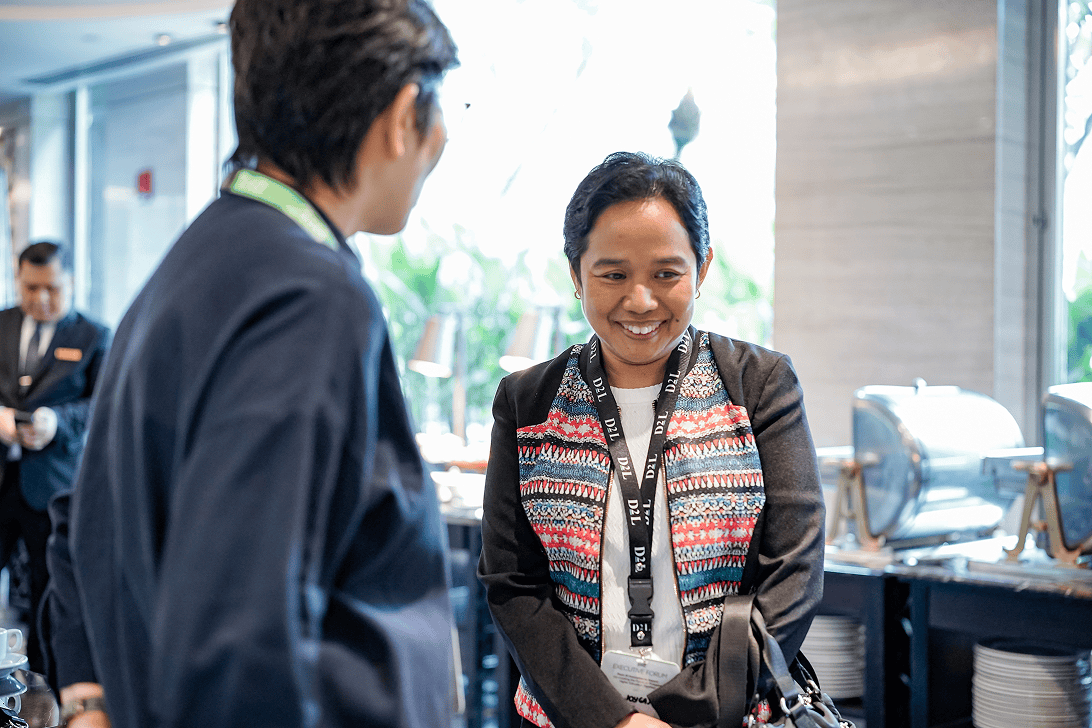
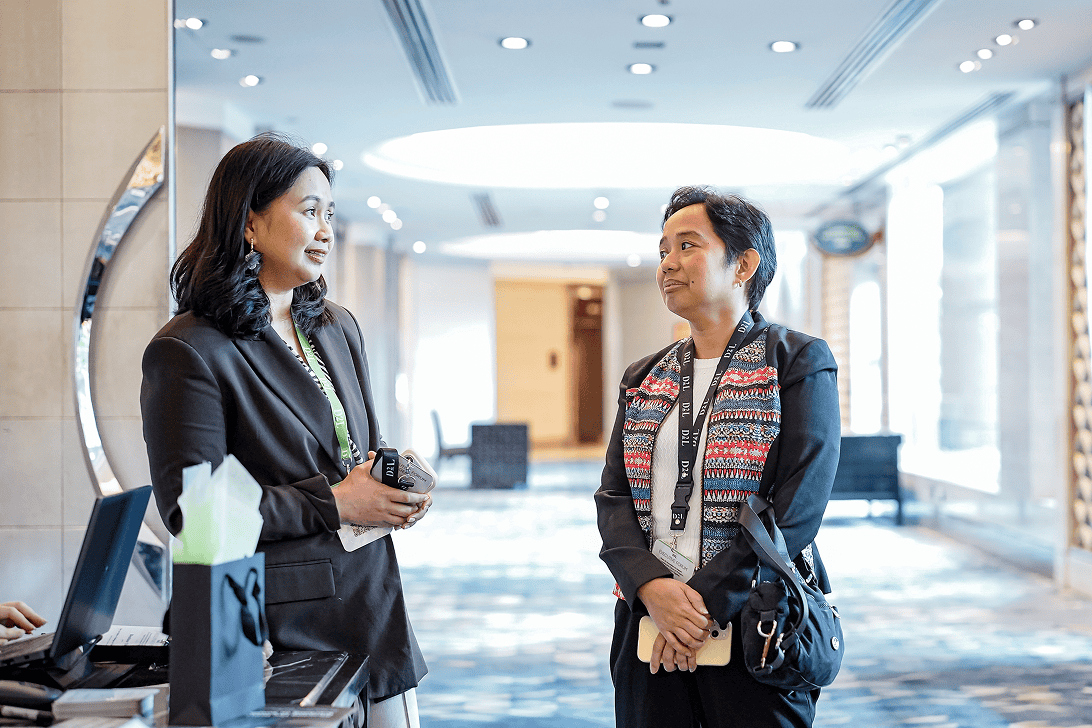


Makati Shangri-La, Manila
Ayala Avenue, Makati Ave, Makati City, 1200 Metro Manila, Philippines
Location80+
Industry Attendees

10+
Expert Speakers

5+
Engaging Sessions


Dean, Faculty of Management and Development Studies, University of the Philippines Open University (UPOU)

Assoc. Professor, University of Santo Tomas (UST) & Council Advisor, AI Association of the Philippines

Associate Professor and Director of SIT Teaching and Learning Academy, Singapore Institute of Technology

Head of Digital Transformation & AI Advisory Board, Far Eastern University

Chief AI Officer, Institute of Adult Learning

President and CEO, Mapua University

3rd Year Student, De La Salle-College of Saint Benilde’s Bachelor of Arts in Diplomacy and International Affairs

Chief Learning Officer, D2L

Regional Director, Asia, D2L

VP, Product Strategy, D2L
10:00 am – 10:30 am
10:30 am – 10:40 am
Speakers:
10:40 am – 11:25 am
Educator resistance to AI is often misread as fear of the future. More often, it reflects legitimate concern that tools and policies are advancing faster than the pedagogy needed to guide them. Bringing together institutional, classroom, and learner perspectives, this panel explores how we preserve educator judgment, redesign assessment so learning remains visible, and create enough trust for students to be honest about AI use. The goal is not to reject the technology, but to ensure that it serves learning rather than quietly redefining it.
Moderator:
Panelists:
11:30 am – 12:00 pm
Across the region, micro-credential policies are gaining rapid momentum. Yet policy frameworks alone cannot resolve the core operational challenge: identifying which skills truly matter and keeping credentials relevant when industry demands shift faster than traditional curriculum cycles.
This session reframes artificial intelligence from a mere subject of instruction into essential institutional infrastructure. Discover how institutions can harness AI to detect real-time capability gaps, anticipate emerging skills, and dynamically design responsive learning pathways aligned with the evolving workforce.
Drawing from a decade of Singapore’s national skills frameworks and credentialing experience, this session outlines practical, high-leverage strategies higher education leaders can execute immediately moving from reactive compliance to proactive, institutional-led innovation.
Speaker:
12:00 pm – 1:00 pm
1:00 pm – 2:00 pm
The Philippines now has a national policy for micro-credentials, but policy alone cannot guarantee that a credential delivers meaningful learning or creates real opportunity. Bringing together institutional, industry, and global perspectives, this panel will examine a critical question: What will it take to build micro-credentials that learners value, institutions can stand behind, and employers recognize and trust?
Moderator:
Panelists:
2:05 pm – 2:50 pm
In 2026, the Singapore Institute of Technology marked a milestone: its first cohort of learners graduated under a competency-based education (CBE) model built on stackable micro-credentials. This session traces that journey, from designing the micro-credential framework and the curriculum development process behind it, to the role Brightspace played in operationalising CBE at institutional scale. Drawing on lessons from this first cohort, the session closes with a look at where AI fits into the next phase of SIT’s CBE and micro-credential work.
Speaker:
2:55 pm – 3:35 pm
When disruption becomes the norm, how can universities keep learning moving forward?
With weather events and other disruptions already costing universities weeks of valuable class time, academic continuity is an increasingly important consideration for institutions across the Philippines. But maintaining continuity doesn’t have to mean simply moving classes online.
This session explores how universities can rethink the role of the LMS as the digital foundation for learning—supporting and connecting face-to-face, hybrid and flexible learning experiences rather than replacing the physical classroom. We’ll look at how technology and thoughtful pedagogy can help educators maintain momentum when classes are disrupted, give students greater flexibility in how they engage, and create more resilient learning experiences.
Speakers:
3:35 pm – 3:50 pm
3:50 pm – 4:20 pm
Join small-group discussions led by D2L facilitators around key findings of the day and what matters most for institutions in the Philippines.
4:20 pm – 4:30 pm
Speaker:
4:30 pm – 5:30 pm