
Indian higher education is entering a period of significant change. AI is reshaping teaching and assessment, online learning is moving from providing access to ensuring quality at scale, accreditation is demanding a more continuous approach to institutional quality, and universities are under growing pressure to prepare learners for a rapidly changing world.
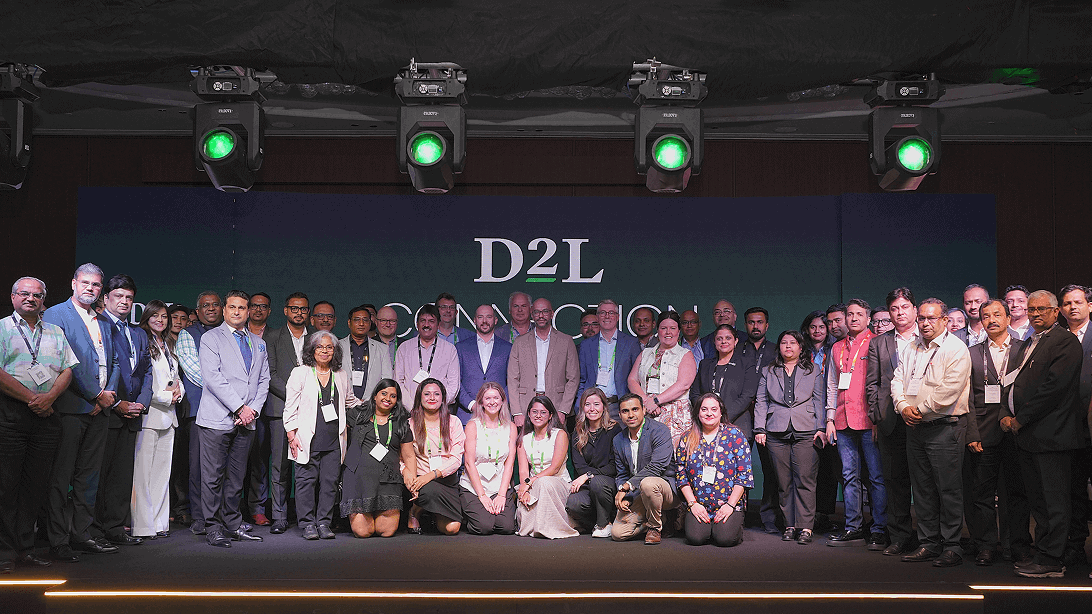
These themes came together at D2L Connection: New Delhi. The event brought together higher education leaders, educators, innovators and learners to exchange perspectives on how institutions can respond to change while keeping quality and learner success at the center.
Across the day’s keynotes, panels, customer stories and discussions, one message stood out: technology creates the greatest value when it enables institutions to strengthen the human part of education—not replace them.
Here are some of the key takeaways from the day.
1. Indian higher education has an opportunity to set new benchmarks
One of the strongest messages from the day was that Indian universities do not simply need to follow established global models. They have an opportunity to create new ones.
That thinking carried into the opening keynote from Professor Padmanabha Ramanujam of O.P. Jindal Global University, who highlighted that institutions need to move from adopting western benchmarks towards innovating locally and creating models that could set new standards for the Global South by leveraging the National Education Policy (NEP) and AI. As AI makes knowledge increasingly accessible, universities will need to differentiate themselves through the application of knowledge, research, innovation and employability.
The global competitiveness panel reinforced this point further. Competitiveness is increasingly about more than rankings. It requires learner-centric education, institutional agility, industry relevance and the ability to prepare graduates for a changing world. Stronger integration with industry, experiential learning and outcome-focused education will therefore become increasingly important.
2. Scaling learning must go hand in hand with quality and personalisation
Beyond access, online learning in India is now challenged to deliver high-quality, engaging and personalised experiences at scale.
During the fireside chat with Mr. Rajiv Tandon from BITS Pilani Digital, the conversation emphasised that online programmes should not simply replicate campus education digitally. They need to be intentionally designed around the online learner, bringing together academic rigour, flexibility, experiential learning, industry relevance and faculty engagement. The discussion also challenged assumptions about who the online learner is. Many learners are choosing online education not because they lack access to traditional options but because they want to gain additional qualifications, develop new skills, or pursue education alongside work and other commitments. That makes the value and experience of online learning increasingly important.
BITS Pilani Digital’s presentation session brought this principle into practice through a flipped-learning model combining asynchronous learning with live faculty interaction. The institution is also bringing together signals around learner engagement, performance and confidence to better understand individual learner needs and enable more targeted interventions.
Manipal University Jaipur demonstrated what this can look like at significant scale. Its learning ecosystem now supports approximately 100,000 students across online and regular modes. Real-time data enables mentors to proactively identify learners who need support, while insights into learner behaviour have informed decisions around content design and delivery.
Therefore, scale should not mean creating a more standardised or impersonal experience. Used effectively, technology and data can help institutions understand and support learners better as they grow.
3. Quality needs to become continuous—from accreditation to learner outcomes
Another common thread throughout the day was the move from periodic measurement towards continuous improvement.
In preparation for NAAC assessment, fragmented processes, manual evidence collection and limited visibility into academic outcomes can make accreditation readiness difficult. But accreditation itself is much more than documentation. It reflects an institution’s commitment to quality, student success and continuous improvement. One important message that emerged from the accreditation panel at the event was the need to change how institutions view NAAC. Rather than seeing accreditation as a painful obligation, institutions can recognise it as an opportunity for meaningful improvement. This shift in perspective can transform the way they approach accreditation.
The opportunity is therefore to embed quality into everyday teaching and learning. When curriculum, learning outcomes, assessment and learner engagement are captured as academic activity happens, institutions can create a stronger foundation for continuous accreditation readiness rather than mobilising primarily around an accreditation cycle.
4. AI needs to move from experimentation to purposeful application
AI was one of the strongest themes throughout the event, but the conversation went beyond simply adopting new tools. The more important question is how institutions can put AI into practice responsibly and meaningfully.
The AI panel highlighted different approaches already being explored by universities—from building AI capability among faculty and students to using AI and integrated learner data to identify students who may need additional support. But faculty readiness remains critical. Institutions need to develop the skills and confidence required to move beyond surface-level use of AI. They need to build AI capability across their academic communities rather than assuming that access to AI tools will automatically translate into meaningful adoption.
Assessment also needs to evolve. As generative AI makes it easier to produce a finished answer, institutions are increasingly considering how to assess the thinking, application and problem-solving process behind it. The discussion explored a shift towards continuous, project-based and authentic forms of assessment that better reflect the capabilities students will need beyond university.
Importantly, the conversation wasn’t about removing educators from the equation. The emerging model keeps humans in the loop. AI can reduce repetitive work, provide insights and intelligence, and enable greater personalisation and efficiency, while faculty retain responsibility for judgment, fairness, mentoring and high-value teaching.
5. Global competitiveness will increasingly be defined by outcomes and industry relevance
What makes a university globally competitive is also changing.
The Global Competitiveness panel explored how rankings alone cannot define success. Learner experience, institutional innovation, technological agility, industry relevance and the ability to prepare graduates for a rapidly changing world are becoming increasingly important differentiators.
Industry integration was central to the conversation. Institutions can move beyond occasional industry visits or short-term internships towards models where employers help define relevant competencies, and learners work continuously on real-world challenges. The discussion also considered how physical campuses could increasingly become spaces for collaboration, experiential learning and industry interaction, while digital environments provide continuity and flexibility around academic learning.
This points towards a more connected future in which universities, industry and technology providers collaborate more closely to ensure learners graduate with not just knowledge but also adaptability, resilience and workplace-ready capabilities. For Indian universities, global competitiveness will therefore increasingly depend on how effectively they connect learning with outcomes and education with the world beyond the university.
AI makes knowledge increasingly accessible. The differentiator for universities will be less about providing information and more about helping learners apply knowledge, adapt to changes, solve problems and become employable.
6. The LMS is becoming strategic learning infrastructure
A thread connecting many of the day’s conversations was the changing role of the LMS.
As institutions expand digital learning, introduce AI, personalise experiences, use data to support learners and pursue greater institutional agility, the learning platform increasingly becomes part of the university’s strategic infrastructure. When teaching, learning, assessment and learner engagement happen within a connected digital environment, institutions can create a stronger foundation for capturing evidence and understanding outcomes as academic activity takes place.
This was reinforced during the learner session, where a student highlighted the importance of an LMS that is available anytime, anywhere and on any device. He shared that he completed much of his learning while commuting on the metro. He also emphasised the need for an intuitive user experience that makes navigation simple, along with tools that support collaboration among learners so that the benefits of real-world interaction and teamwork are not lost.
The D2L Solutions Spotlight demonstrated how Brightspace continues to evolve around this shift, including developments in content management, embedded AI, analytics, learning outcomes and distributed administration. These capabilities are designed to help institutions deliver high-quality learning at scale while reducing unnecessary complexity for educators and learners.
New and evolving capabilities span the learning experience, content management, administration, analytics and AI. CreateSpace, for example, is designed to provide a centralised environment for institutions to create, manage and reuse high-quality source courses, helping maintain consistency as content production scales.
D2L also showcased developments across Lumi, including capabilities designed to help educators transform and adapt learning content and provide learners with in-context AI-supported study experiences. Analytics capabilities are similarly evolving beyond reporting towards identifying specific points of learner struggle and enabling more timely intervention.
Together, these developments reflect a broader shift highlighted throughout the event: the LMS is no longer simply a place to host courses. It is becoming a strategic learning infrastructure.
As institutions scale online and campus learning, adopt AI, personalise learner experiences, enable faculty, demonstrate academic quality and compete globally, they need a learning platform capable of evolving alongside those priorities.
Looking ahead
Whether the conversation is about AI, online learning, accreditation or global competitiveness, the underlying challenge is remarkably similar. Institutions need the agility to respond to change without losing sight of academic quality and the learner experience.
For Indian higher education, this presents a significant opportunity—not simply to adapt to the future of learning, but to help define it.
The strongest takeaway from D2L Connection: New Delhi was that the future of higher education will not be shaped by technology alone. It will be shaped by how effectively institutions bring together people, pedagogy, technology, data and industry around a clear purpose: creating better outcomes for learners. The right LMS can be the right foundation for that.
Learn how Brightspace can support higher education institutions in India – https://www.d2l.com/en-in/solutions/higher-education/
Written by:


